Best 10 Things to See in Paris
Paris is a city of grand monuments, intimate streets and everyday scenes that deserve as much attention as its famous landmarks. This guide brings together ten places that offer a strong first impression of the French capital — from the views above the Seine to historic neighbourhoods, museum masterpieces and quieter places to slow down. The list is designed to work as a flexible guide rather than a strict itinerary. Pick a few nearby places for one day, or use all ten to shape a first visit to Paris.
BEST TIME TO VISIT
April to June, or September to October
Currency
Euro (EUR)
Language
French
Time Zone
CET / CEST (UTC+1 / UTC+2)
Where to stay in Paris, France
Not sure where to book? We’ve rounded up the best hotels in Paris for every budget, with live prices and availability.
Eiffel Tower
The Experience
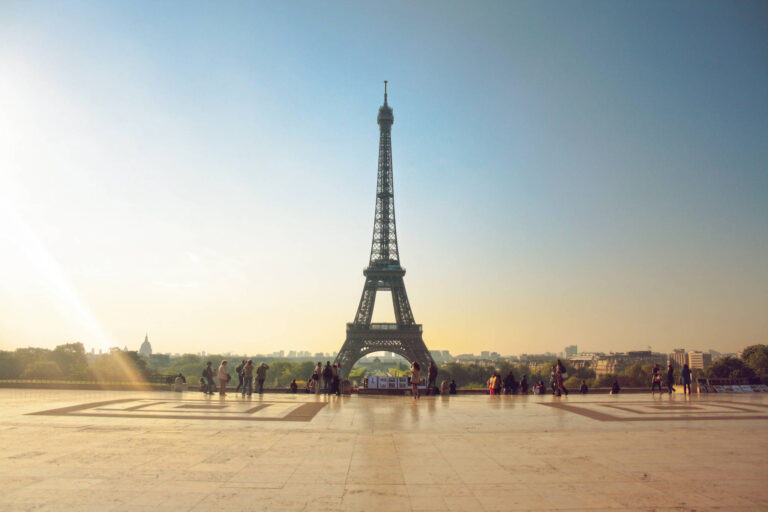
The Eiffel Tower is Paris at its most instantly recognisable. Whether you climb it, take the lift to the top or simply admire it from the Trocadéro gardens, it is one of those landmarks that remains impressive even when you have seen it in photographs a hundred times.
The experience is as much about the changing views as the tower itself: the Seine below, the Champ de Mars stretching south, and Paris’s pale rooftops fading into the distance.
Why it’s worth your time
For a first visit to Paris, the Eiffel Tower gives you both the city’s most iconic image and one of its best panoramic viewpoints. The summit is not essential for everyone, but seeing the tower up close — especially at dusk — is.
Make the most of it
Walk from Trocadéro for the classic frontal view, then cross the Pont d’Iéna towards the Champ de Mars. If you plan to go up, book in advance and allow extra time for security and queues. Return after dark if you want to see the tower sparkle on the hour.
When to go
Early morning is quieter for photographs around Trocadéro. Late afternoon and sunset are best for atmosphere, but they are also among the busiest periods.
Before you visit
The tower is exposed to wind and weather, so bring an extra layer outside summer. Summit access can be affected by weather conditions, and popular time slots sell out well ahead during school holidays.
Plan your visit
Location: Champ de Mars, 7th arrondissement
Time needed: 1.5 to 3 hours, depending on the level visited and queues
Budget: Paid entry; adult tickets vary by level and whether you use stairs or lifts
Opening hours: Hours vary by season; check the official site before booking
Official website: toureiffel.paris
Directions: Metro Bir-Hakeim, Trocadéro or École Militaire
Book your visit:
The Louvre
The Experience
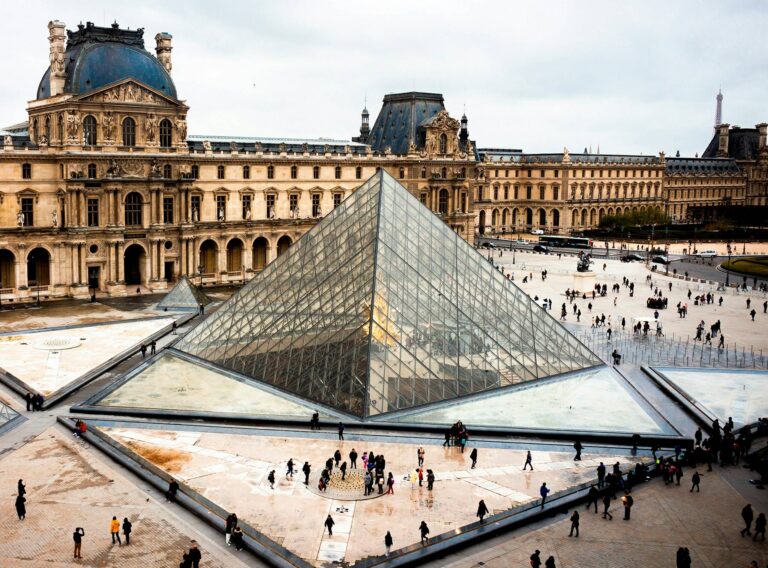
The Louvre is not a museum you “finish” in one visit. It is an enormous former royal palace filled with works from ancient civilisations, European painting, sculpture and decorative arts.
For many visitors, the Mona Lisa is the obvious target. But the real pleasure comes from choosing a small area, moving slowly and allowing time for the building itself: the grand galleries, courtyards and views across the Tuileries.
Why it’s worth your time
Few museums match the Louvre for scale, range and historical setting. Even a focused visit gives you access to some of the world’s most famous works, alongside rooms and collections that are far less crowded.
Make the most of it
Choose one wing or one theme before you arrive. A first-time visit could focus on the Denon Wing for major paintings and sculpture, then finish with a walk through the Tuileries Garden. Book a timed ticket and avoid trying to see everything.
When to go
Morning slots are usually the easiest way to see key works before the museum gets busy. Wednesday and Friday evenings can be a good option if you prefer a longer, less rushed visit.
Before you visit
The Louvre is closed on Tuesdays. Large bags are restricted, security queues can be significant, and the route to the Mona Lisa can become crowded in the middle of the day.
Plan your visit
Location: Rue de Rivoli, 1st arrondissement
Time needed: 2 to 4 hours for a focused first visit
Budget: Paid entry; book a timed ticket online
Opening hours: Usually 9am to 6pm; late opening on Wednesday and Friday; closed Tuesday
Official website: louvre.fr
Directions: Metro Palais Royal–Musée du Louvre
Book your visit:
Île de la Cité & Notre-Dame
The Experience
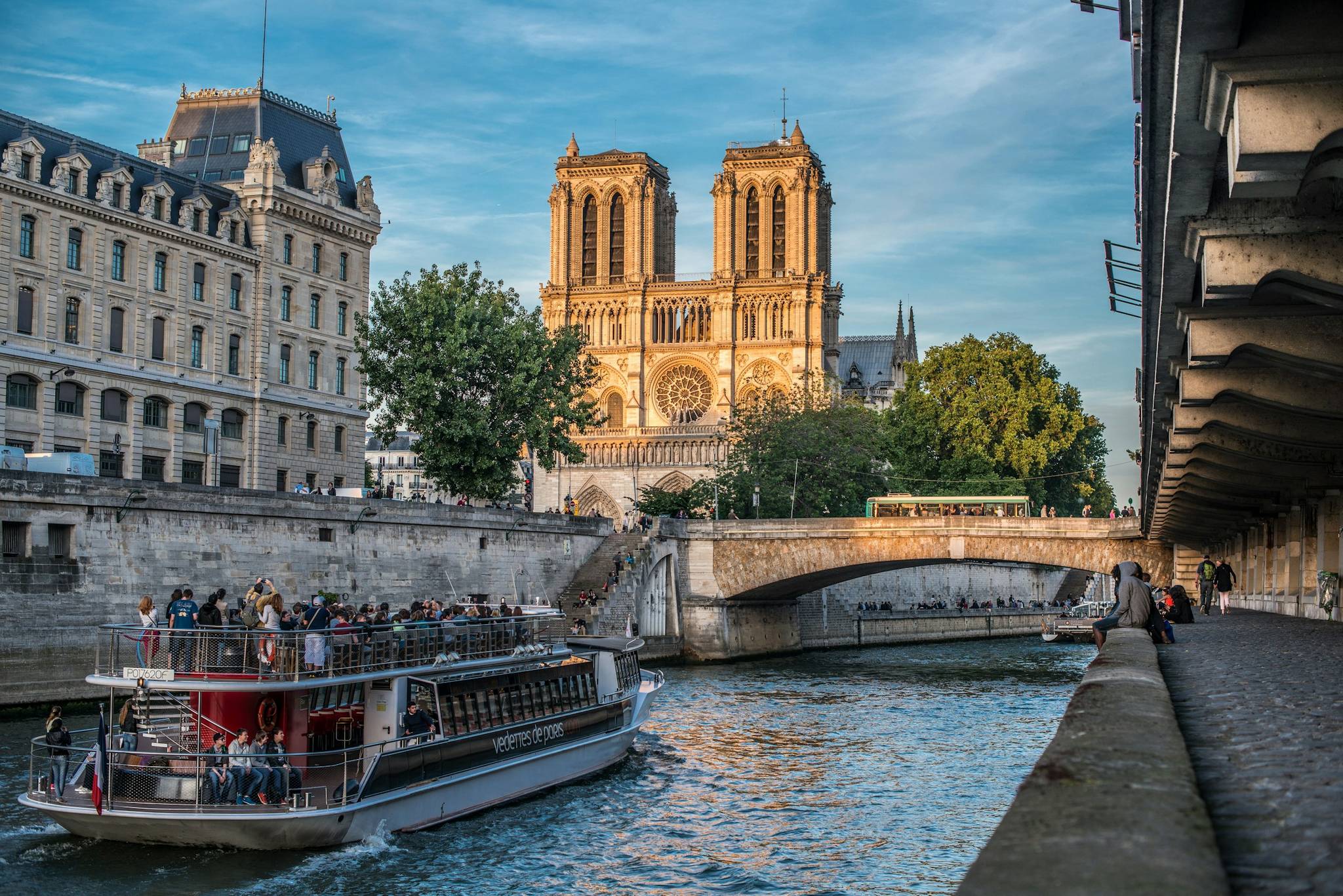
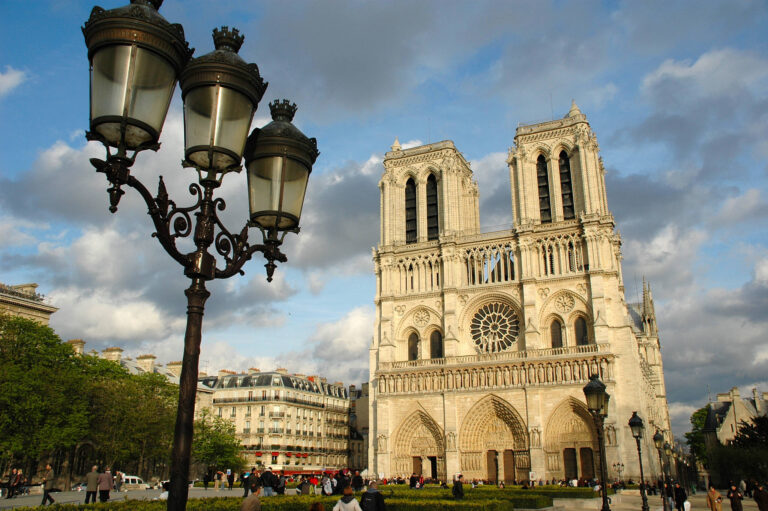
Île de la Cité is the historic heart of Paris, set between the two branches of the Seine. It is where narrow streets, riverside views, Gothic architecture and some of the city’s oldest institutions come together.
Notre-Dame is the essential stop, but the island is best enjoyed slowly: cross the bridges, walk around the cathedral, pause at Square Jean XXIII and continue towards Sainte-Chapelle or the nearby Latin Quarter.
Why it’s worth your time
This is one of the clearest places to feel Paris’s history in its physical setting. You are surrounded by the Seine, close to major monuments, and within walking distance of the Marais, the Louvre and Saint-Germain-des-Prés.
Make the most of it
Visit Notre-Dame early, then walk behind the cathedral towards the river. Continue to Sainte-Chapelle if you want another major Gothic highlight, or cross the Pont Saint-Louis and take a slower route through the Latin Quarter.
When to go
Early morning is best for a quieter view of the cathedral and the bridges. Golden hour works particularly well for photographs along the Seine.
Before you visit
Notre-Dame is an active place of worship. Entry arrangements, security procedures and timed-access rules may change, so check official information shortly before your visit.
Plan your visit
Location: Île de la Cité, 4th arrondissement
Time needed: 1 to 2 hours for the island and cathedral area
Budget: Exterior and island walk are free; nearby monuments may require tickets
Opening hours: Cathedral and monument hours vary; check before visiting
Official website: notredamedeparis.fr
Directions: Metro Cité or Saint-Michel–Notre-Dame
Book your visit:
Montmartre & Sacré-Cœur
The Experience
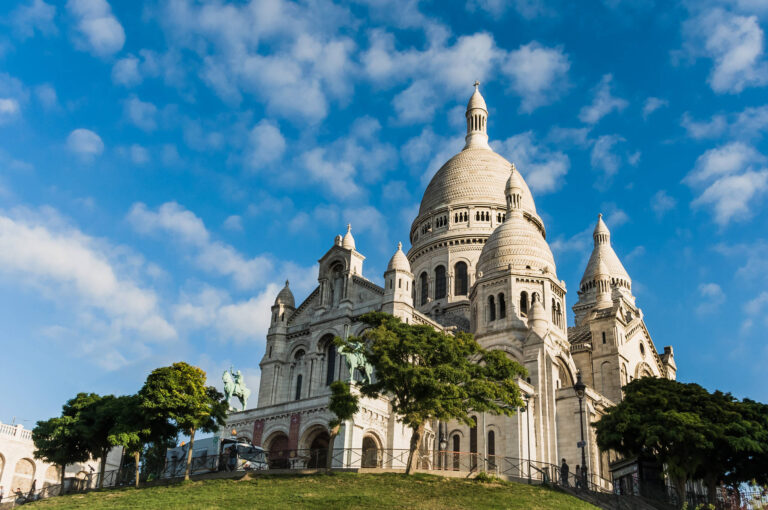
Montmartre feels different from the grand boulevards and formal monuments of central Paris. Its steep streets, staircases, small squares and old village atmosphere lead up to Sacré-Cœur, whose hilltop position gives one of the widest views over the city.
The basilica is the visual landmark, but the pleasure comes from exploring the streets around it rather than rushing directly from metro to viewpoint.
Why it’s worth your time
It combines a major monument, a panoramic viewpoint and one of Paris’s most distinctive neighbourhoods. It also works well late in the day, when the light softens and the city begins to glow below.
Make the most of it
Arrive via Abbesses or Lamarck–Caulaincourt rather than the busiest route. Walk through quieter streets, visit Place du Tertre briefly, then continue around the back of Sacré-Cœur for calmer views.
When to go
Morning is quieter for walking the neighbourhood. Sunset gives the best city views, but expect crowds around the basilica steps.
Before you visit
Montmartre is hilly and includes many steps. The area around Place du Tertre is very touristy, so spend time beyond the main square if you want a more relaxed experience.
Plan your visit
Location: 18th arrondissement
Time needed: 2 to 3 hours
Budget: Basilica entry is free; the dome requires a separate paid ticket
Opening hours: Basilica and dome have different schedules
Official website: sacre-coeur-montmartre.com
Directions: Metro Abbesses, Anvers or Lamarck–Caulaincourt
Book your visit:
Musée d’Orsay
The Experience
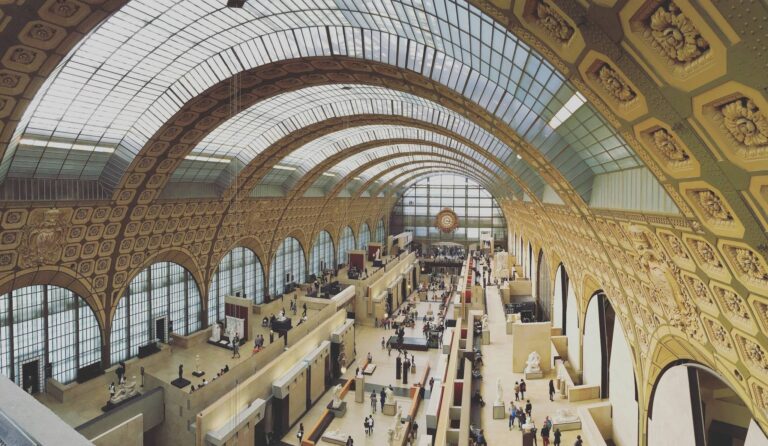
Set inside a former railway station on the Left Bank, the Musée d’Orsay is one of Paris’s most rewarding museums. Its collection is especially strong for Impressionist and post-Impressionist art, with works by Monet, Renoir, Degas, Van Gogh and many others.
The building alone is worth noticing: the giant station clock, high central hall and views across the Seine towards the Louvre make the visit feel more varied than a conventional museum.
Why it’s worth your time
It is often more manageable than the Louvre while still containing an extraordinary concentration of famous art. It is a particularly strong choice if you have limited museum time in Paris.
Make the most of it
Start on the upper floor for the Impressionist galleries, then work back through the museum. Pair it with a walk through the Tuileries or Saint-Germain-des-Prés.
When to go
Go at opening time or on a late-opening evening when available. Avoid the middle of the afternoon during busy periods.
Before you visit
Some galleries become crowded around major works. Book ahead when possible and check the current opening schedule because museum hours can change for exhibitions or special events.
Plan your visit
Location: 1 Rue de la Légion d’Honneur, 7th arrondissement
Time needed: 2 to 3 hours
Budget: Paid entry; online booking recommended
Opening hours: Usually closed Monday; check current hours before visiting
Official website: musee-orsay.fr
Directions: RER C Musée d’Orsay, Metro Solférino
Book your visit:
Le Marais
The Experience
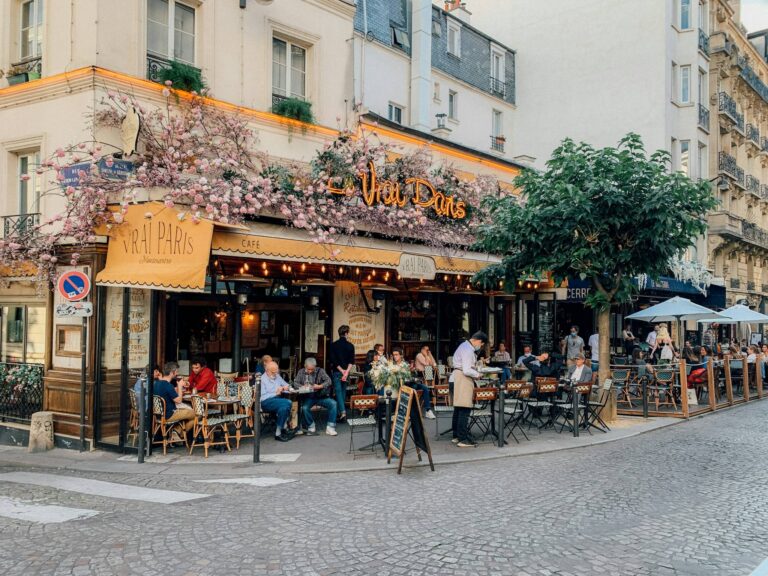
Le Marais is one of Paris’s best neighbourhoods for wandering without a fixed plan. It mixes elegant historic mansions, small museums, independent shops, Jewish heritage, cafés and some of the city’s most lively streets.
It is less about one monument than about a sequence of discoveries: Place des Vosges, Rue des Rosiers, Hôtel de Sully, quiet courtyards and the constantly changing streets around Saint-Paul.
Why it’s worth your time
It shows a more human-scale Paris. The streets are compact enough to explore on foot, and there is always something to combine with the walk: food, design, history, galleries or a museum visit.
Make the most of it
Begin at Place des Vosges, walk through Rue des Francs-Bourgeois, then head towards Rue des Rosiers. Leave time to step into courtyards and side streets rather than following only the main shopping route.
When to go
Late morning through early evening is ideal, especially on a weekday. Sunday is lively, but it can be crowded.
Before you visit
Many independent shops and museums have their own closing days. The district is compact, but its busiest streets can feel crowded at weekends.
Plan your visit
Location: 3rd and 4th arrondissements
Time needed: 2 to 4 hours
Budget: Free to explore; museums, food and shopping vary
Opening hours: Neighbourhood access is unrestricted; individual venues vary
Directions: Metro Saint-Paul, Chemin Vert or Filles du Calvaire
Book your visit:
Luxembourg Garden
The Experience
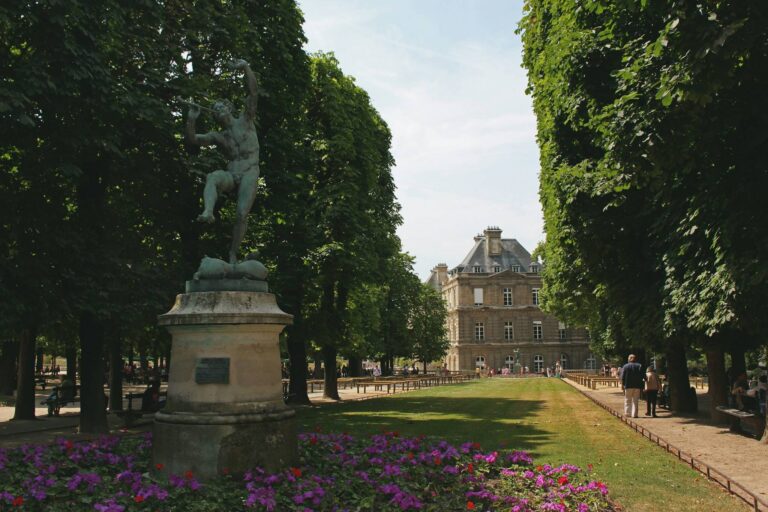
Luxembourg Garden is a formal public garden beside the French Senate, with broad paths, fountains, statues, lawns and rows of green chairs where Parisians sit, read and watch the world go by.
It offers a pause from the city’s busiest sights and works especially well between visits to the Latin Quarter, Panthéon and Saint-Germain-des-Prés.
Why it’s worth your time
It is one of the easiest places to experience the slower rhythm of Paris. The garden does not demand a long visit, but it can become a memorable break in a full sightseeing day.
Make the most of it
Pick up a coffee nearby, walk around the central basin and find a free green chair. Combine the garden with the Panthéon or a walk through the Latin Quarter.
When to go
Spring and early autumn are particularly pleasant. Morning is quieter, while sunny afternoons show the garden at its liveliest.
Before you visit
Opening times vary with daylight and season. Some lawns and facilities may be closed or restricted depending on maintenance and weather.
Plan your visit
Location: 6th arrondissement
Time needed: 45 minutes to 1.5 hours
Budget: Free
Opening hours: Seasonal daily hours
Directions: RER B Luxembourg, Metro Odéon or Notre-Dame-des-Champs
Book your visit:
Canal Saint-Martin
The Experience
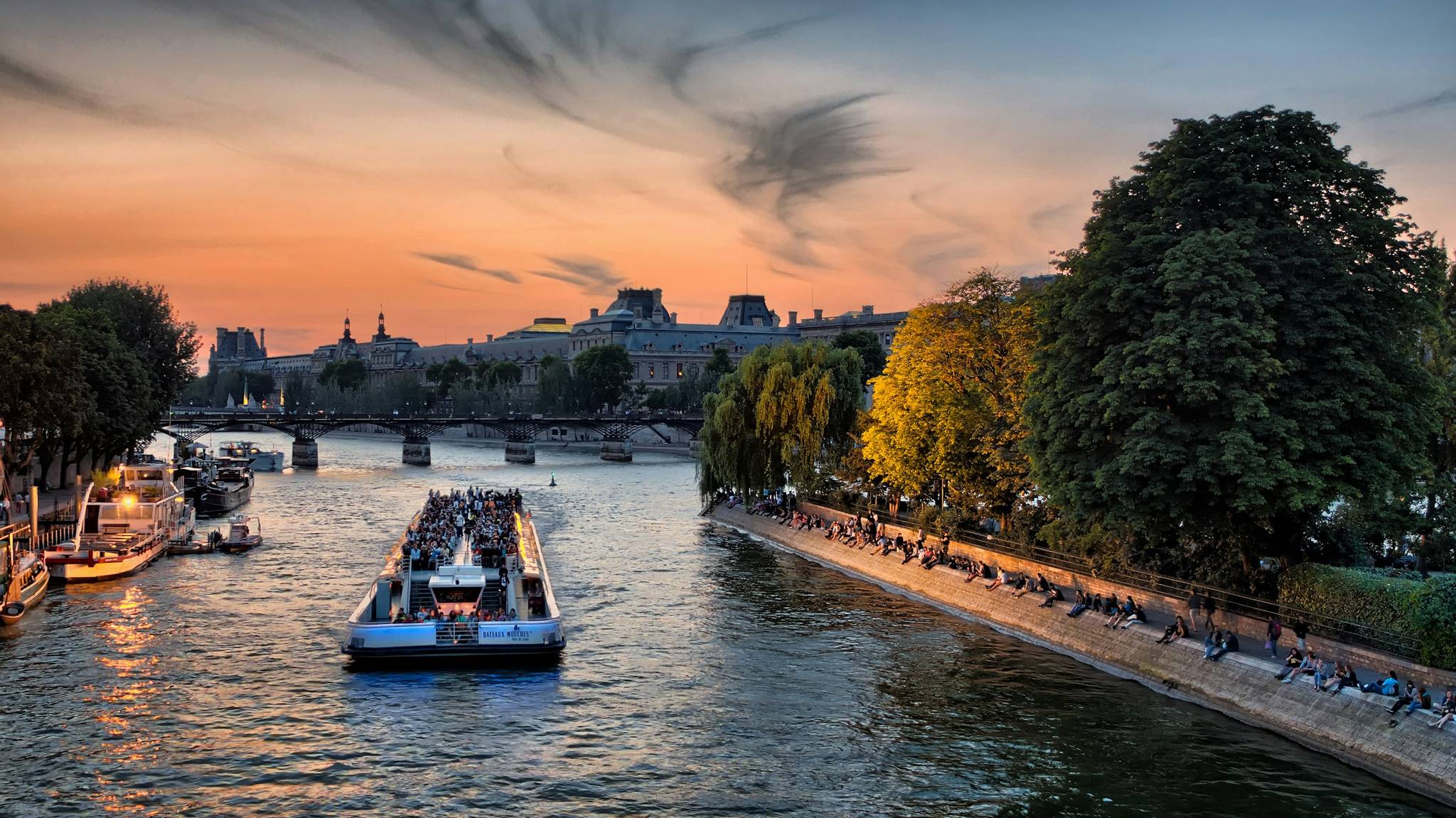
Canal Saint-Martin offers a more local and relaxed side of Paris. Tree-lined quays, iron footbridges, waterside cafés and the slow movement of the locks create a very different atmosphere from the grand monuments around the Seine.
It is a place to walk, sit with food, watch boats pass through the locks and explore the streets around République and Jaurès.
Why it’s worth your time
The canal is ideal when you need a break from major sights. It gives you a sense of everyday Paris and works well for an unplanned afternoon.
Make the most of it
Walk from République north toward Jaurès, stopping at the locks and footbridges. Bring a picnic or choose a casual café nearby. Continue to Parc des Buttes-Chaumont if you want a longer walk.
When to go
Late afternoon through early evening is best, particularly in warm weather. Weekday mornings are quieter if you prefer photography.
Before you visit
This is not a formal attraction, so the experience depends on weather and time of day. The liveliest areas can be busy on sunny weekends.
Plan your visit
Location: 10th arrondissement
Time needed: 1 to 2.5 hours
Budget: Free, excluding food and drinks
Opening hours: Public outdoor area; cafés and shops vary
Directions: Metro République, Goncourt, Jacques Bonsergent or Jaurès
Book your visit:
Marché d’Aligre
The Experience
Marché d’Aligre is one of the most enjoyable food markets in Paris. It combines an outdoor market street, an indoor covered market and a neighbourhood atmosphere that feels more everyday than polished.
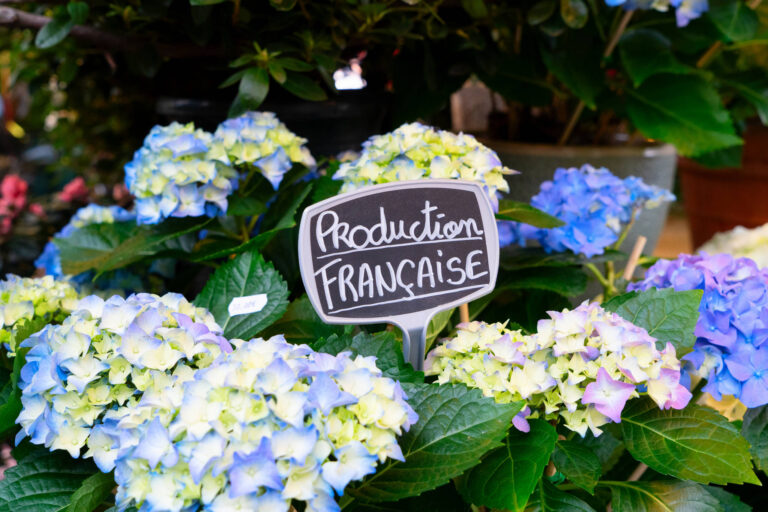
You will find fruit, vegetables, cheese, bread, flowers, fish, spices and small places to eat nearby. It is a good stop for building a picnic or simply seeing a more local side of the city.
Why it’s worth your time
The market gives a direct, sensory view of Parisian food culture without requiring a formal restaurant booking. It is also an easy addition to a day exploring Bastille, the Marais or the Promenade Plantée.
Make the most of it
Go hungry, buy a few picnic items and continue toward the Coulée Verte René-Dumont. Explore both the outdoor stalls on Rue d’Aligre and the covered Marché Beauvau.
When to go
Morning is best, especially before lunch when the stalls are fully stocked and the market feels most active.
Before you visit
Market days and hours vary, and some stalls close earlier than expected. Bring a reusable bag and cash as a backup, even though many vendors accept cards.
Plan your visit
Location: Rue d’Aligre and Marché Beauvau, 12th arrondissement
Time needed: 45 minutes to 1.5 hours
Budget: Free to browse; food spending varies
Opening hours: Vary by day and vendor
Directions: Metro Ledru-Rollin or Faidherbe–Chaligny
Book your visit:
Père-Lachaise Cemetery
The Experience
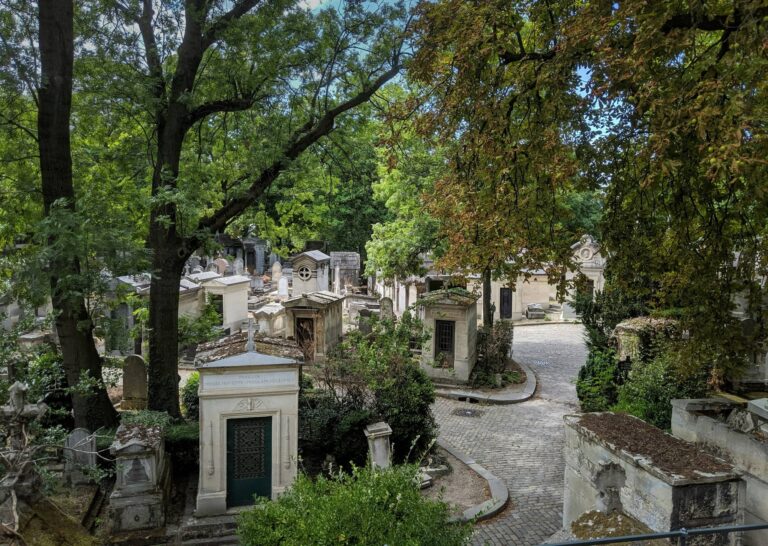
Père-Lachaise is more than a cemetery: it is a vast, wooded landscape of winding paths, elaborate tombs, sculptures and quiet corners. It is the resting place of many artists, writers, musicians and public figures, but it remains interesting even if you do not seek out individual graves.
The atmosphere is reflective rather than gloomy, and the scale makes it feel like a historic park as much as a burial ground.
Why it’s worth your time
It is one of Paris’s most distinctive walking experiences. The cemetery offers architecture, history, greenery and a welcome change of pace from enclosed museums and crowded attractions.
Make the most of it
Download or photograph a map near the entrance, then choose a small route instead of trying to cover everything. Leave time to wander away from the most visited graves.
When to go
Morning or late afternoon are the calmest times. Autumn is especially atmospheric, but the paths can be slippery after rain.
Before you visit
The cemetery is large, uneven and hilly in places. Wear comfortable shoes, bring water in summer and check seasonal closing times before setting out.
Plan your visit
Location: 16 Rue du Repos, 20th arrondissement
Time needed: 1.5 to 3 hours
Budget: Free
Opening hours: Seasonal daily hours
Directions: Metro Père Lachaise, Philippe Auguste or Gambetta
Book your visit:
Find & Compare Flights
Check the best route options and ticket prices to kickstart your trip planning.
Where to stay in Paris, France
Paris has accommodation for every travel style—from historic boutique hotels in Saint-Germain-des-Prés to creative addresses around Canal Saint-Martin and stylish stays in Le Marais. Choosing the right neighborhood makes a real difference: stay central for first-time sightseeing, or slightly outside the tourist core for a more local atmosphere. Here are my personal recommendations:
Unique & Instagram-Worthy Stays:
Hôtel Dame des Arts: A striking contemporary hotel in the Latin Quarter, with a rooftop offering panoramic views across Paris. Its bold interiors, leafy courtyard and exceptional location near the Seine make it a memorable choice for a first stay in the city. Check availability
Le Grand Mazarin: A playful and luxurious boutique hotel in the heart of Le Marais. Expect richly layered interiors, bold colours, eclectic design and an ideal base for exploring the galleries, cafés and independent shops of one of Paris’s most characterful districts. Check availability
Hôtel Bachaumont: A beautifully restored Art Deco-inspired hotel near Montorgueil, one of the best areas for food lovers. The elegant design, lively bar and walkable location make it perfect for travellers who want a stylish Paris experience without staying beside the biggest landmarks. Check availability
Classic Parisian Stays:
Hôtel des Grands Boulevards: A charming boutique hotel combining vintage Parisian details with a relaxed, modern atmosphere. Tucked away near the Grands Boulevards, it is well placed for restaurants, theatres, the Louvre area and easy metro connections across the city. Check availability
Hôtel Le Six: A refined and peaceful option near Luxembourg Gardens and Montparnasse. It is a great choice for travellers looking for a quieter base while remaining within easy reach of Saint-Germain-des-Prés, the Latin Quarter and central Paris. Check availability
Budget-Friendly Favorites:
The People Paris Marais: A modern hostel with private rooms and dormitories in a convenient location close to Bastille and Le Marais. The social spaces make it a good option for solo travellers who want to meet people without sacrificing comfort or access to the city centre. Check availability
Generator Paris: A design-focused hostel near Canal Saint-Martin, an area known for its waterside walks, cafés and creative energy. It is especially practical for travellers on a tighter budget who do not mind using the metro to reach the main landmarks. Check availability
EDITORIAL NOTES
We visit or research every place on this list ourselves and no business pays to appear here. Some accommodation links are affiliate links: if you book through them we may earn a commission, at no extra cost to you. Prices shown are indicative and change with your dates.